Concrete Core & Cutting Contractor Dubai
Professional Concrete Cutting Services in Dubai
Concrete Core & Cutting Contractor Dubai
Professional Concrete Cutting Services in Dubai
Electric Concrete Wall Saw: What Homeowners and Contractors Should Know
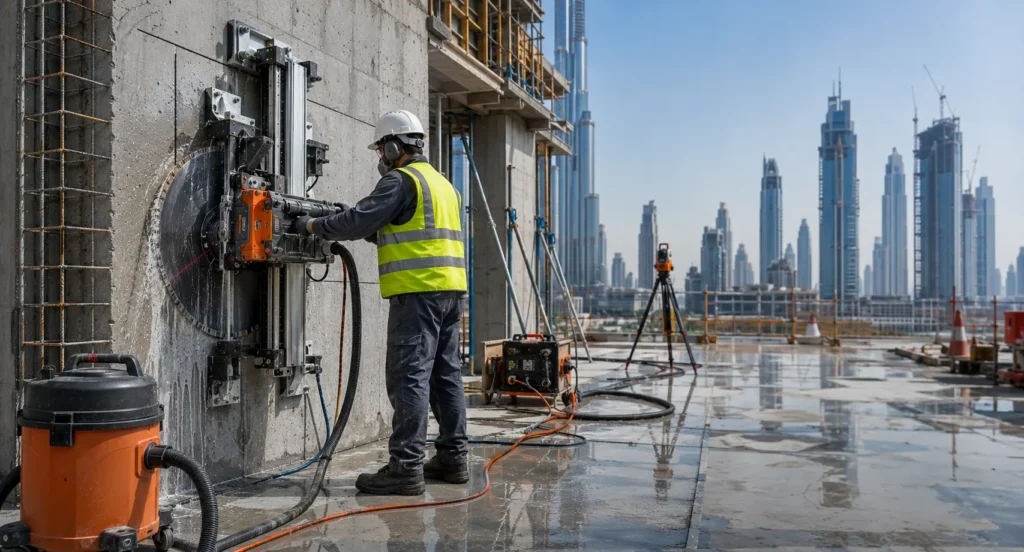
Cutting an opening into a concrete wall is not a task most people plan for often, which is exactly why it helps to understand the options before hiring anyone. One term you will likely come across during your research is electric concrete wall saw, a method that has become the go to choice for clean, controlled openings in both homes and commercial buildings across Dubai.
Whether you are updating a single room or planning a larger renovation involving several openings, understanding how an electric concrete wall saw fits into the process makes it easier to compare quotes, set realistic expectations, and avoid surprises once the work actually starts.
Understanding the Equipment
An electric wall saw is a diamond bladed cutting machine that runs along a fixed track secured to the wall surface. Because the blade follows this track rather than being guided freehand, the resulting cut stays straight and consistent from one end of the opening to the other.
The saw draws power from a standard electrical connection rather than a hydraulic power pack or a gasoline engine. This single difference changes a lot about how the job feels on site, from the noise level to how much space the crew needs to set up.
Why This Method Works Well for Most Renovation Projects
Quiet Operation
Electric motors run noticeably quieter than hydraulic or gas powered alternatives, which matters when neighbors, tenants, or building management have noise restrictions in place.
No Fumes Indoors
Since there is no combustion engine involved, cutting can take place inside occupied spaces without concerns about exhaust building up in enclosed rooms.
Straighter, Cleaner Cuts
The track guided design keeps the blade perfectly aligned throughout the cut, producing edges that are far more consistent than freehand cutting can achieve.
Easier Site Setup
Without a separate hydraulic power unit or fuel canisters to transport, the crew can often set up faster, particularly in tight residential spaces or upper floor apartments.
Projects That Commonly Require This Type of Cutting
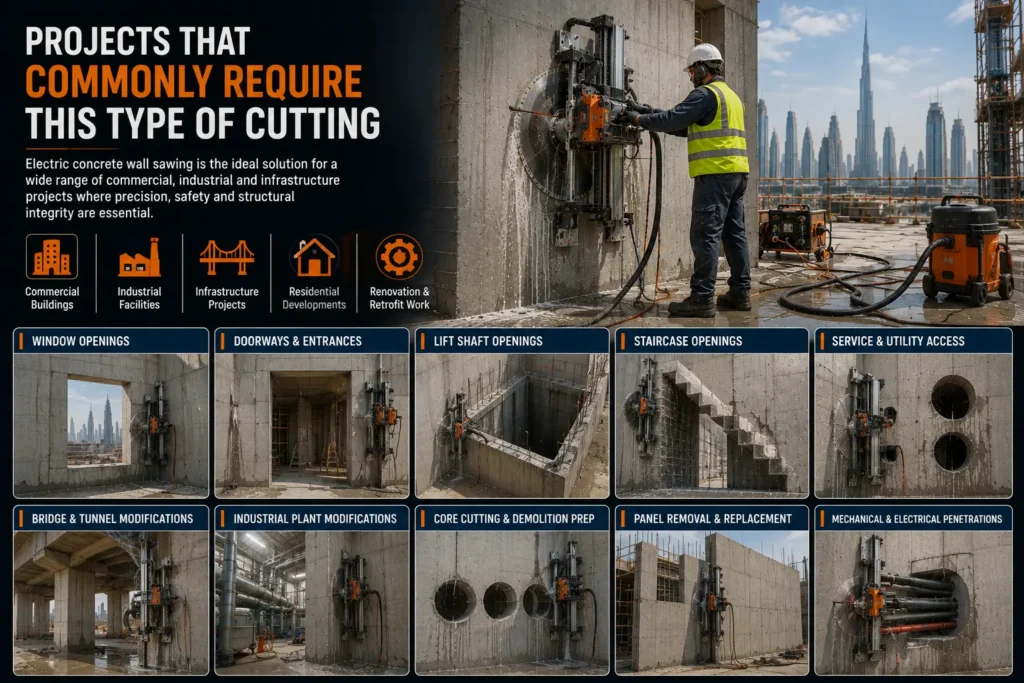
- Adding a new door opening between two rooms during a renovation
- Installing a larger window in place of an existing smaller one
- Creating a pass through opening between a kitchen and dining area
- Cutting access for a new staircase or elevator during a building upgrade
- Forming an opening for a garage door or storefront entrance
- Preparing a wall section for partial demolition as part of a larger project
Materials This Equipment Can Cut Through
Most professional crews are equipped to handle more than plain poured concrete. Reinforced concrete, concrete block, and various types of masonry all fall within the normal scope of this cutting method, with the blade and cutting speed adjusted depending on what the wall is made of.
Reinforced concrete generally takes longer to cut because the blade needs to pass through embedded steel bars in addition to the concrete itself. Lighter block or masonry walls tend to cut faster, which can affect both the time required on site and the overall cost of the project. Sharing details about your wall type, even a rough guess, helps the technician prepare the correct blade before arriving.
Preparing Your Space Before the Crew Arrives
A few simple steps before the scheduled cutting day can make the process go more smoothly. Clearing furniture, decor, or stored items away from the work area gives the crew enough room to install the guide track safely. If the project is happening in an occupied home or office, moving sensitive electronics or fragile items away from the cutting zone also helps avoid accidental damage from dust or vibration.
Comparing Concrete Cutting Methods
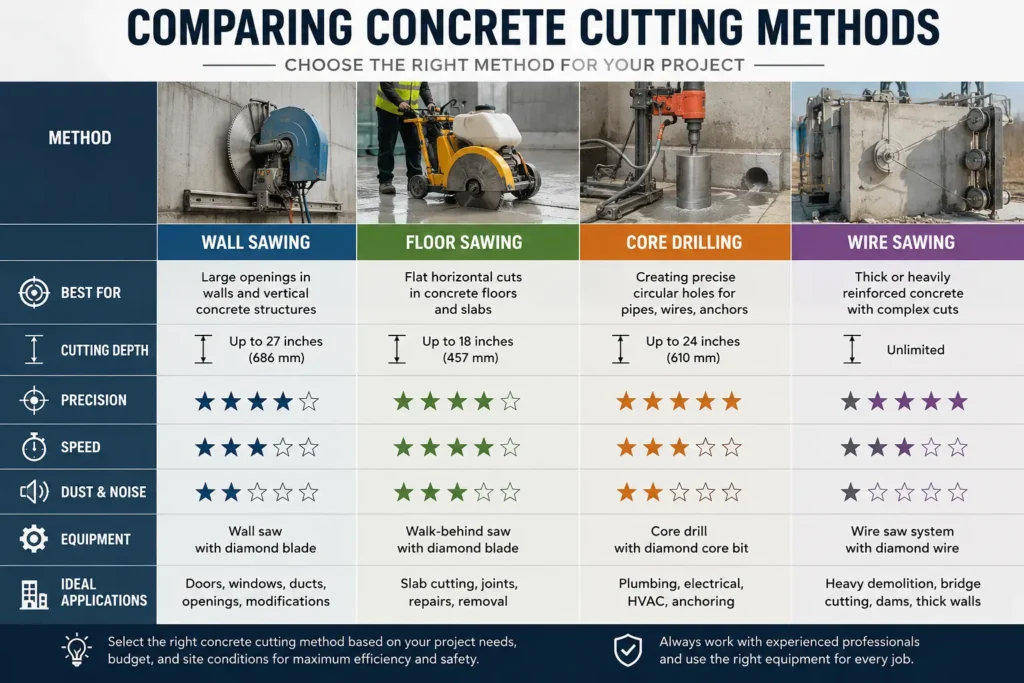
| Method | Cut Type | Common Use |
|---|---|---|
| Electric Wall Saw | Straight line | Doors, windows, large openings |
| Hydraulic Wall Saw | Straight line | Thick or heavily reinforced structural walls |
| Core Drilling | Round hole | Pipes, cables, anchor bolts |
| Handheld Saw | Straight, less precise | Small surface cuts, minor modifications |
For most residential walls and standard commercial partitions, the electric option offers the best balance of precision, noise control, and setup simplicity.
How a Wall Cutting Project Typically Proceeds
- Discuss the Project You describe the opening you need, including approximate wall thickness and the intended size.
- Site Visit A technician measures the wall, checks access, and scans for rebar or hidden utilities before confirming the plan.
- Written Estimate You receive a clear quote reflecting wall thickness, opening size, and any access challenges.
- Cutting Day The crew installs the guide track, connects water cooling, and cuts the opening according to the confirmed measurements.
- Section Removal The cut piece of wall is carefully removed and cleared from the site.
- Walkthrough and Sign Off You review the finished opening together with the technician before the job is considered complete.
What Determines the Price of a Wall Cutting Job
Several factors shape the final cost of this type of project, and a trustworthy contractor should explain each one clearly:
- The thickness and density of the wall being cut
- Whether the wall contains reinforcement that slows the cutting process
- The overall size of the opening, including height and width
- Access to the work area, especially on upper floors
- Whether cleanup and debris removal are included in the quote
- How quickly the project needs to be completed
Scheduling and Communication During the Project

Good communication often matters as much as the equipment itself. A reliable team will confirm the appointment window in advance, let you know if they are running early or late, and explain any findings from the scanning process before proceeding with the cut.
This becomes especially important on projects involving multiple openings across different rooms or floors, where clear updates help avoid confusion about which areas have been completed and which are still scheduled. Asking how a contractor handles updates and changes during the project, before you book, is a simple way to set expectations on both sides.
Signs You Are Working With a Reliable Contractor
- They ask detailed questions about your project before quoting a price
- They mention scanning for rebar and utilities as a standard step
- They explain the difference between wall sawing, core drilling, and other methods relevant to your job
- They provide a written estimate rather than a vague number over the phone
- They have completed similar projects and can describe or show past work
Getting the Most Value From an Electric Concrete Wall Saw Service
Value in this context is not just about finding the lowest price. A cheaper quote that skips scanning or uses an undersized blade can end up costing more once mistakes need correcting. The better approach is comparing what each contractor includes in their price, such as scanning, cleanup, and a written scope of work, alongside the number itself.
It also helps to ask how the company handles unexpected findings, such as discovering reinforcement in a spot that was not anticipated. A contractor with a clear process for pausing, reassessing, and communicating changes tends to deliver a smoother experience than one that simply pushes ahead regardless of what the wall reveals during cutting.
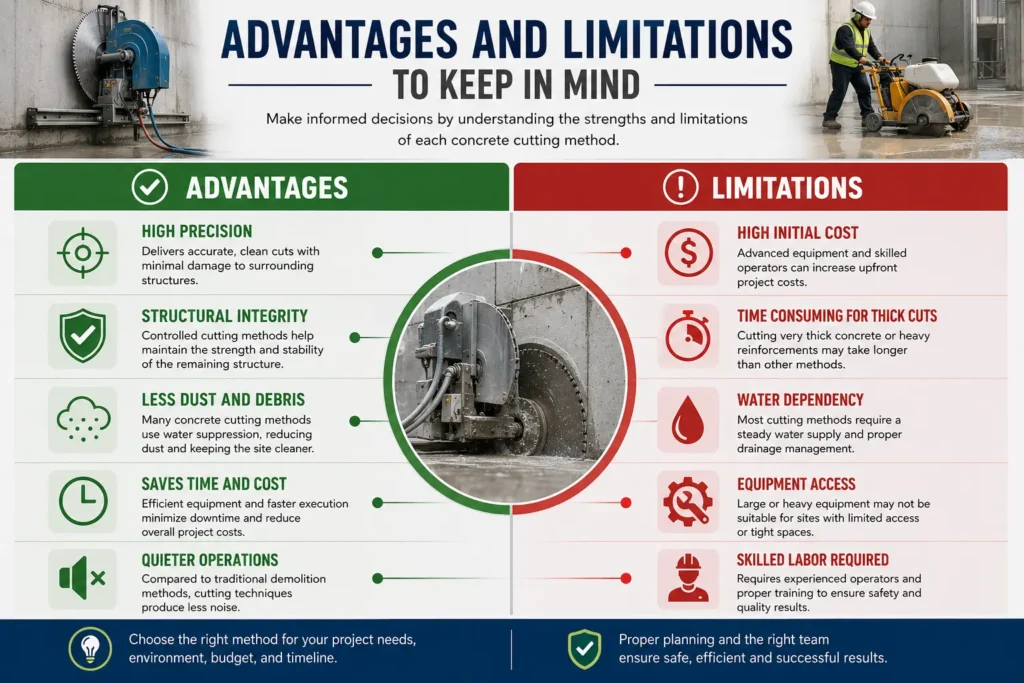
Advantages and Limitations to Keep in Mind
Advantages
- Precise, straight cuts guided by a stable track system
- Reduced noise compared to hydraulic or gas powered equipment
- No exhaust fumes, suitable for indoor and occupied spaces
- Water cooled cutting that keeps dust to a minimum
- Clean edges that often require little additional finishing
Limitations
- Very thick structural walls may still require hydraulic equipment
- A stable power source is needed to support consistent cutting performance
- Track setup adds a short preparation step compared to handheld tools
Frequently Asked Questions
What is an electric wall saw used for?
It is used to cut straight, precise openings through concrete or block walls for doors, windows, and other structural or renovation projects.
Does this method produce a lot of noise?
It produces noticeably less noise than hydraulic or gas powered saws, making it a common choice for occupied homes and offices.
Is dust a concern with this cutting method?
Not usually, since water cooling runs continuously during the cut, which keeps airborne dust significantly lower than dry cutting methods.
Can it cut through walls with steel reinforcement?
Yes, diamond blades are designed to cut through reinforced concrete, though extremely thick or heavily reinforced walls sometimes need hydraulic equipment instead.
How long does a typical project take?
A standard door or window opening is often completed within a few hours, while larger openings may take longer depending on wall thickness.
Is scanning required before the wall is cut?
Yes, scanning identifies rebar, cables, and hidden utilities inside the wall, which helps prevent damage and keeps the project safe.
What is the difference between wall sawing and core cutting?
Wall sawing creates straight openings for doors and windows, while core cutting produces round holes typically used for pipes, cables, or bolts.
Can the same contractor handle demolition as well?
Yes, many contractors, including Concrete Contractor Dubai, offer wall saw cutting alongside core cutting, slab cutting, and demolition services.
What happens if the crew finds unexpected reinforcement mid cut?
If scanning was done properly beforehand, surprises are rare, but if reinforcement is discovered during cutting, an experienced crew will pause, reassess, and adjust the approach before continuing safely.
Do I need to be present the entire time the crew is working?
It helps to be available at the start to confirm the opening location and again at the end for the final walkthrough, though staying on site for the full duration is not usually necessary.
Final Thoughts
For most homes and commercial spaces, this cutting method offers a practical balance of precision, low noise, and minimal disruption compared to older techniques. Understanding how the process works, from the initial site visit to the final walkthrough, makes it much easier to compare contractors and know what a fair price actually includes.
Contact Concrete Contractor Dubai

Concrete Contractor Dubai, operated by Rizwan Anwar Technical Services LLC, provides wall saw cutting, core cutting, roof cutting, wire saw cutting, slab cutting, and demolition services across residential, commercial, and industrial sites in Dubai.
Contact for Call 0528585560
Email Rizwananwartech@gmail.com to schedule a free site visit and receive a clear, written quote for your project.